
Cost Collection
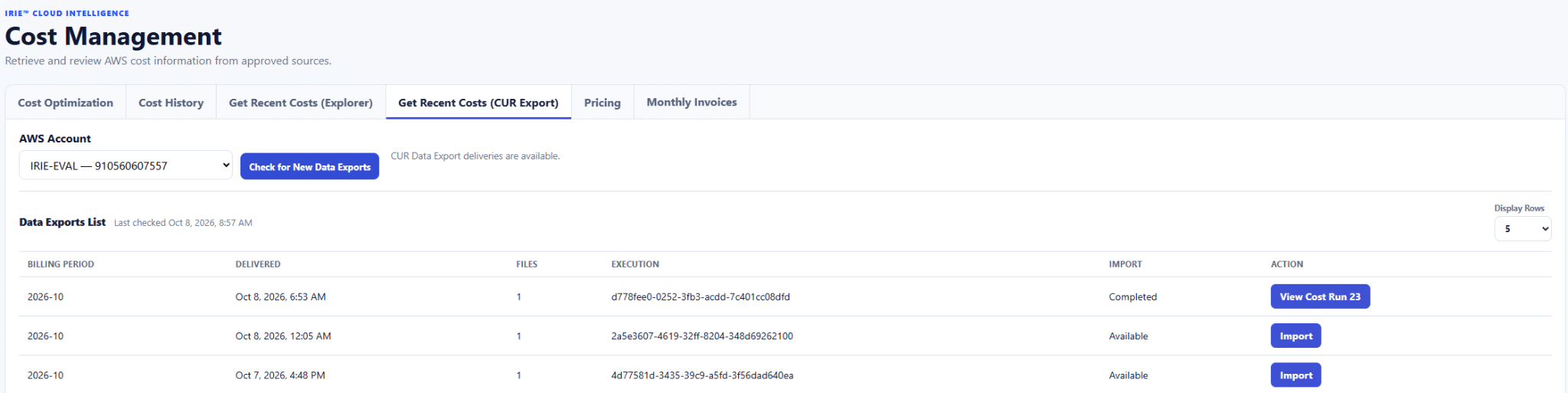
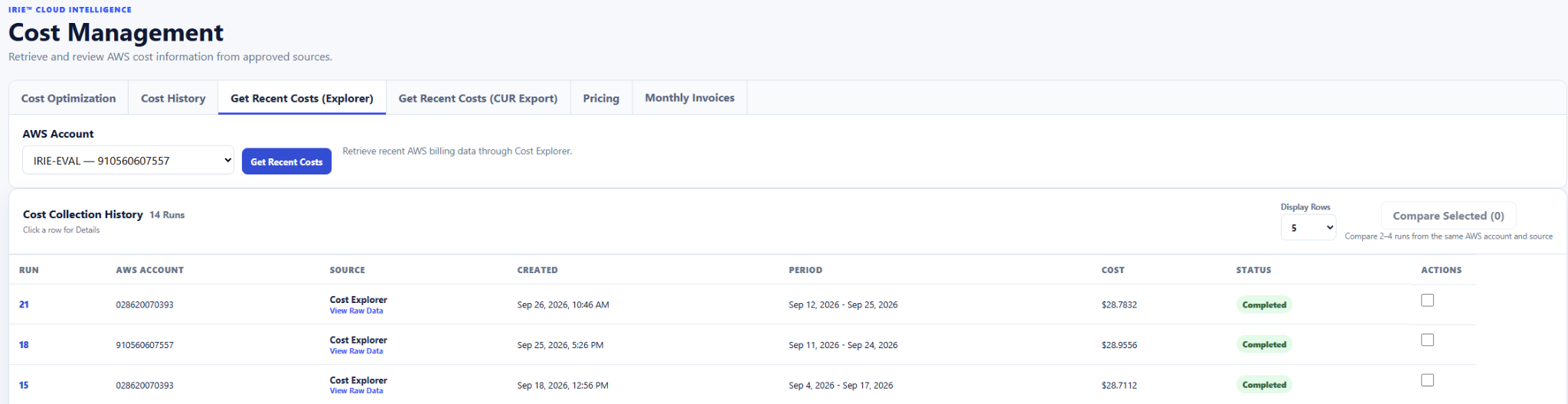
Collect cloud costs using two available methods. Cost Explorer extraction or by the recommended Cost and Usage Reports. IRIE persists the data into IRIE’s historical repository to enable cost analysis.
IRIE · COSTS WITH CONTEXT
Understand current spending. Investigate potential savings. Connect cloud costs with the resources behind them.
IRIE brings Cost Collection, Cost Optimization, and Cost History together with discovered resources and their relationships. Teams can review where cloud money is going, investigate supported savings opportunities, and return to the records behind the analysis.
Collect cloud costs using two available methods. Cost Explorer extraction or by the recommended Cost and Usage Reports. IRIE persists the data into IRIE’s historical repository to enable cost analysis.
Correlate the extracted cost data with discovered resources and current pricing to give you a clearer view on spending.
Use IRIE’s repository to view historical costs in your accounts. Cost History preserves earlier cost collections so your team can return to the account, source, and reporting period behind a review.
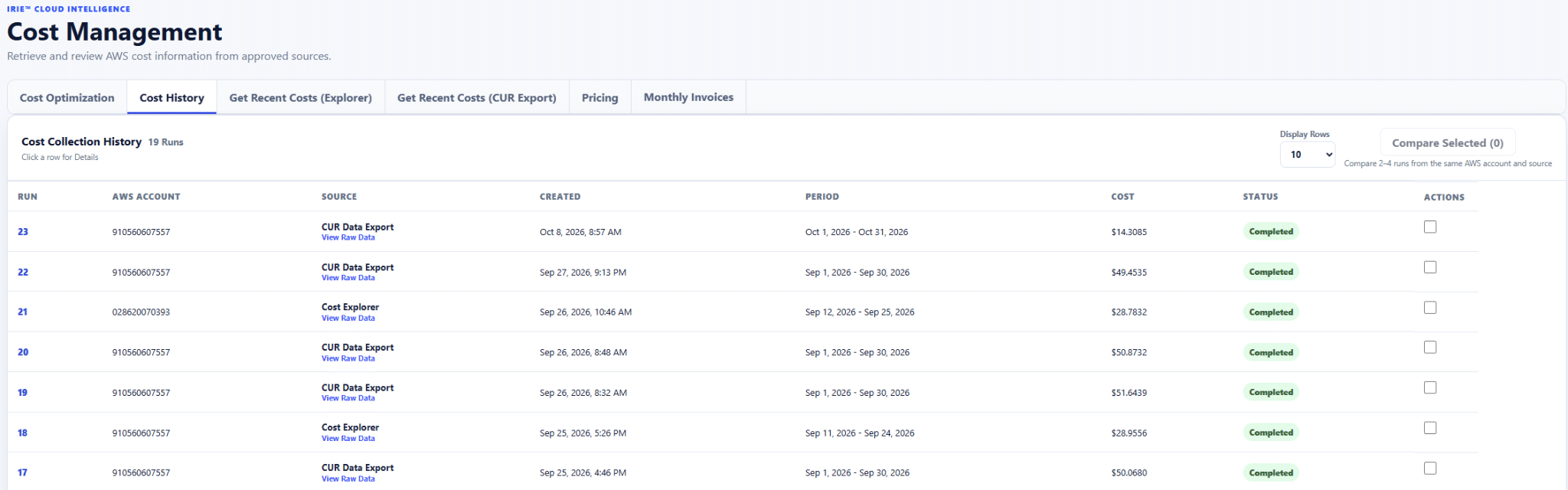
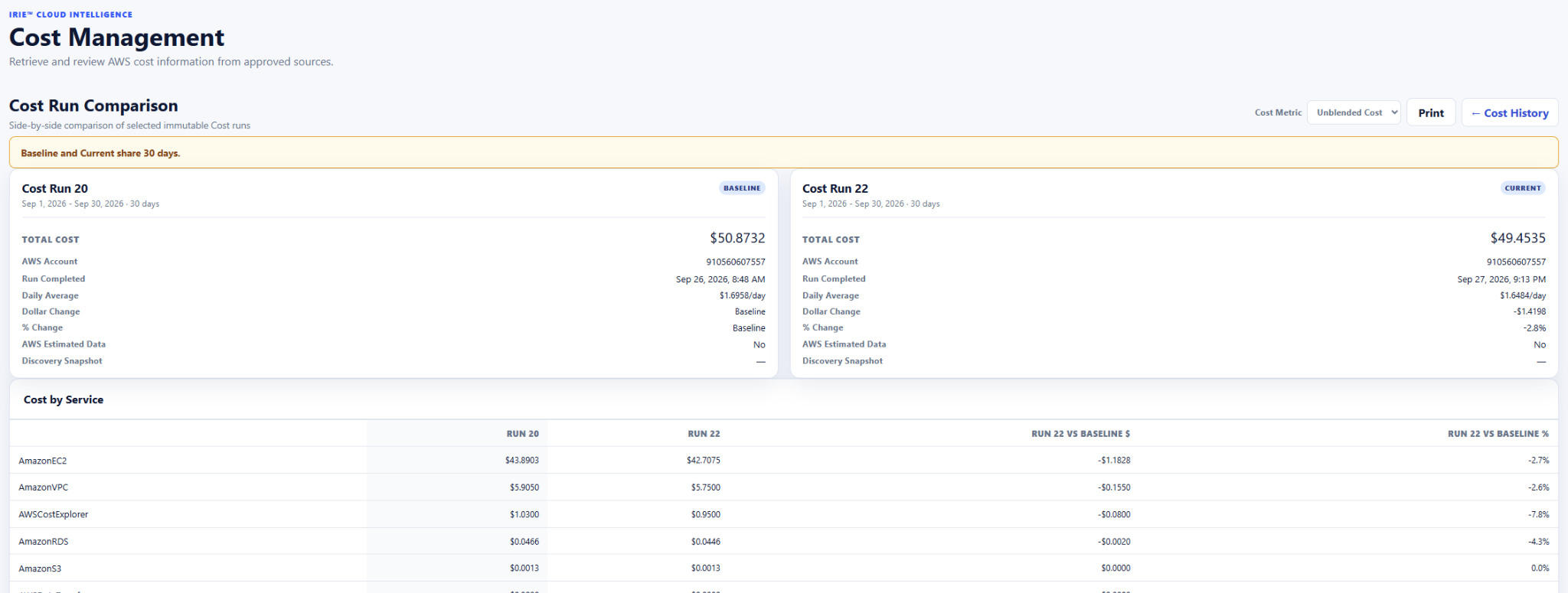
Compare reporting periods to understand how spending has changed.
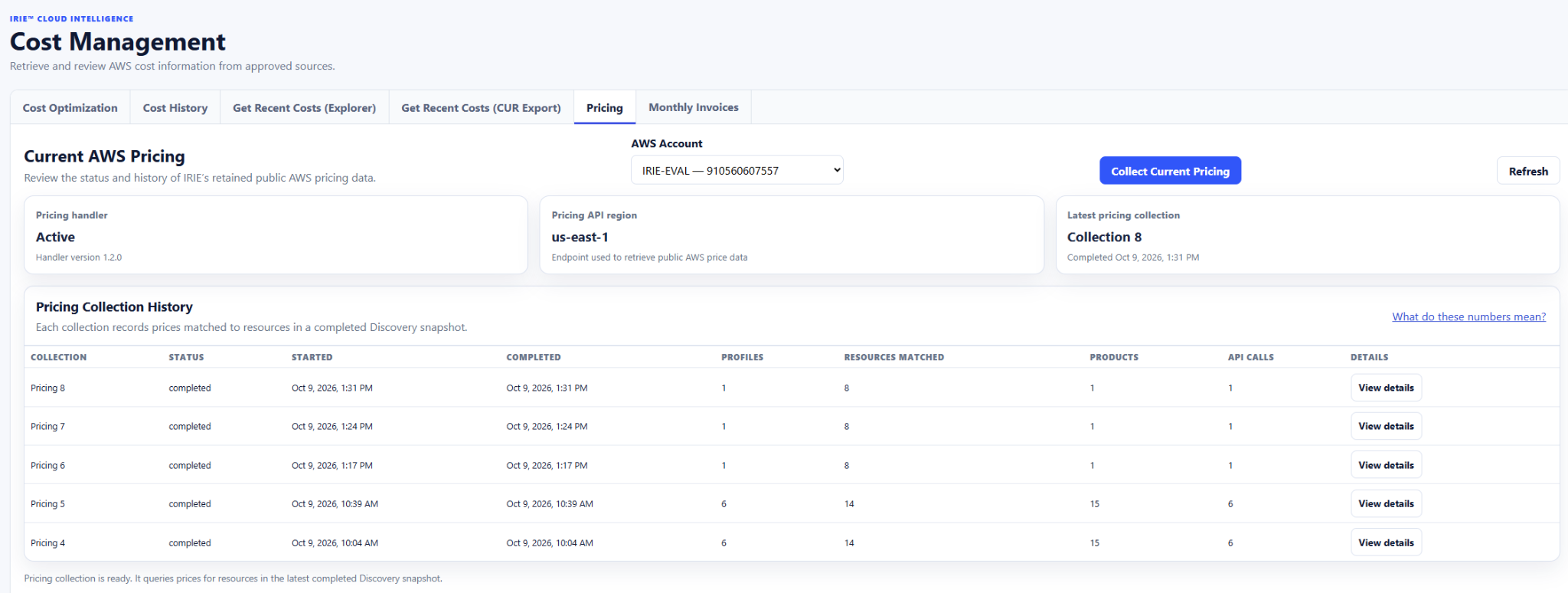
Extract the cloud’s latest pricing for each of your discovered resources and persist it into IRIE’s Pricing repository for historical records, providing trend analysis.
Cost Collection gathers supported billing and usage data, including cost and usage exports and Cost Explorer collections. Each collection identifies the account, data source, and reporting period, giving your team a clear basis for interpreting the recorded charges.
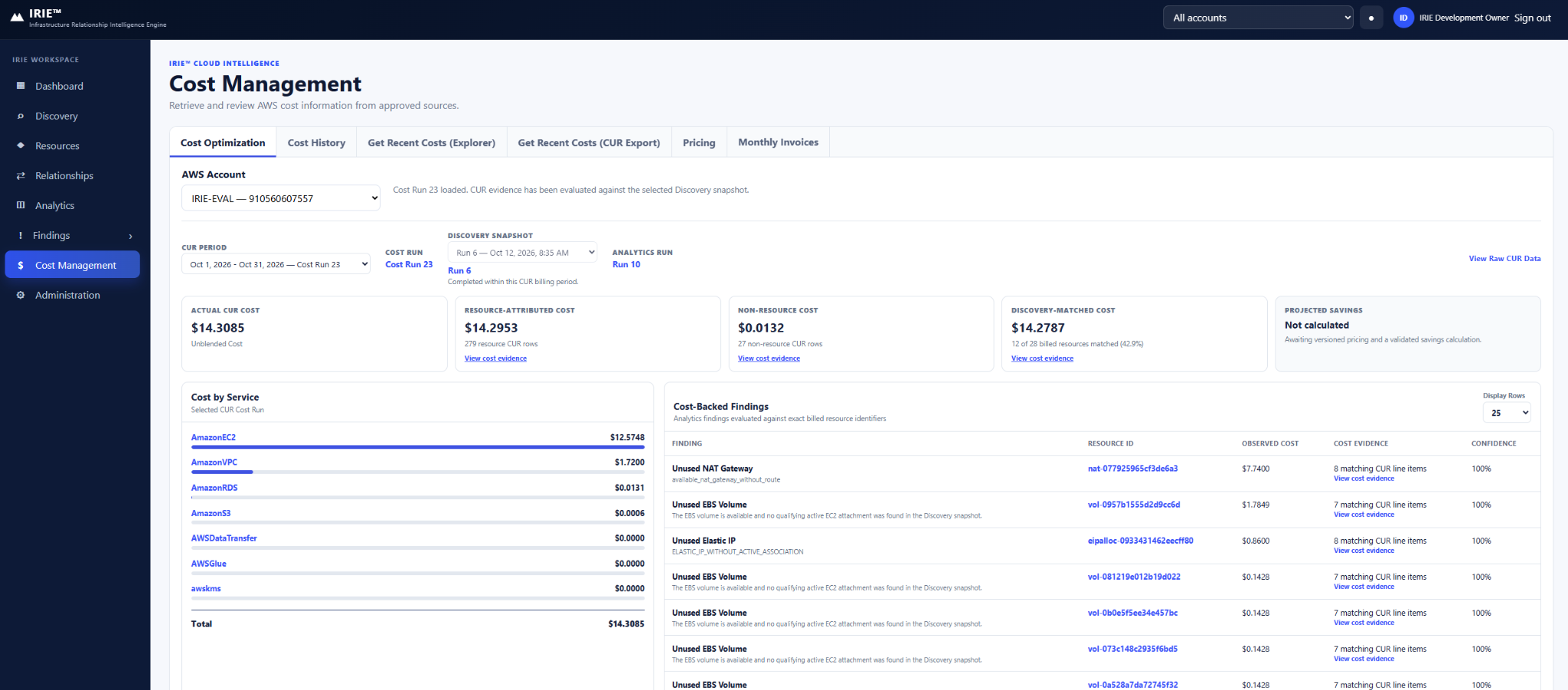
Review the latest available cost collection, examine spending by service, and drill into the supporting records. Where cost identifiers can be matched to discovered resources, IRIE adds the resource and relationship context that helps explain the spending.
Current spending reflects the collected reporting period and the availability of the source data.
Cost Optimization connects supported analytics findings, such as unused or unattached resources, with available financial evidence. Teams can see which resources warrant attention and review the cost records behind the opportunity.
Example findings include unused EBS volumes, unused Elastic IPs, unattached network interfaces, unused security groups, and orphaned snapshots. IRIE evaluates calculated analytics against completed discovery snapshots and preserves the evidence behind each finding.
Recorded charges and available pricing context help assess potential savings. Resource relationships add context before a team considers a cleanup or change.
IRIE discovery and analysis are read-only. Customers review the findings, decide which opportunities are appropriate, and retain control over approvals and resource changes.
Use discovery, relationships, and cost analysis together to understand both the expense and the infrastructure behind it.
Discuss your spending visibility and resource review needs with Short Hill Corporation.